Reviewing I Love My Students for Real Embroidery Projects
As a designer who has spent years digitizing patterns and reviewing machine embroidery design files for commercial use, I approach every new asset with a critical eye. It is not just about whether the image looks cute on a screen; it is about how those lines translate into thread, how the tension holds up on fabric, and whether the final finished product justifies the time and material costs. Recently, I evaluated the I Love My Students design to determine its viability for real-world applications, from boutique custom apparel to high-volume Etsy seller inventories.
First Impressions: Mood and Visual Personality
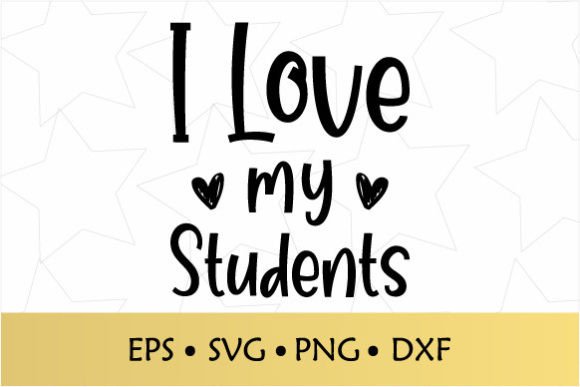
The first thing that strikes you about I Love My Students is its inherent warmth. In the world of Crafts and educational merchandise, designs often lean too heavily into clichés or overly complex cartoonish elements. This design, however, feels balanced. It carries a professional yet affectionate tone, making it suitable for a wide demographic of educators, from preschool teachers to university professors. The layout appears clean, which is crucial when we consider the limitations of embroidery hoops and the behavior of thread on various textiles.
From a Graphics perspective, the vector nature of the file suggests scalability without loss of quality. This is a significant advantage for designers who need to adapt the artwork for different mediums, such as large tote bag design prints or small embroidered patch applications. The visual personality is inviting, creating an immediate emotional connection that can drive sales for small shop product lines targeting the education sector.
Real-World Application: The Teacher Appreciation Scenario
To truly test the utility of this embroidery file, I imagined a common real-life scenario: preparing a custom gift for Teacher Appreciation Week. A client requested a set of personalized items for a third-grade teacher. The goal was to create a cohesive look using a sweatshirt embroidery piece and a matching canvas tote.
Using I Love My Students for the sweatshirt required careful consideration of placement. The chest area is prime real estate, but it is also where fabric stretch and body movement can distort a design. Because this file is provided in vector formats like AI and EPS, along with SVG and PNG, I had the flexibility to adjust the size precisely before converting it into machine-readable stitches. The result was a crisp, legible design that sat comfortably on the ribbed cuff of the sleeve, offering a subtle yet impactful statement.
For the tote bag, the design’s clarity shone even brighter. Canvas has a coarse fabric texture that can swallow fine details. However, the bold lines of this design held up well, ensuring that the message remained readable from a distance. This versatility makes it an excellent choice for personalized gift bundles, where consistency across different materials is key to perceived value.
Technical Performance and Stitch Considerations
When translating any digital art into thread, we must think about stitch types. While the specific digitization settings are not provided in the download package, the visual structure of I Love My Students lends itself well to standard embroidery techniques. The lettering likely benefits from a satin stitch border to define edges clearly, while any filled areas would require a balanced fill stitch pattern to prevent puckering.
One critical factor is stitch density. If the design is too dense, it can cause the fabric to pucker, especially on lighter materials like cotton t-shirts or baby embroidery items. Conversely, if it is too sparse, the underlying fabric might show through, ruining the aesthetic. As a reviewer, I advise testing the design on scrap fabric first. This allows you to adjust tension and choose the right stabilizer—a cut-away for stretchy knits or a tear-away for stable wovens.
The inclusion of a transparent PNG is particularly useful for creating printable mockup images. Before stitching a single thread, you can overlay the design on photos of various garments to gauge contrast and scale. This step is invaluable for commercial embroidery businesses that need to present professional previews to clients without producing physical samples for every inquiry.
Navigating Challenges: Where to Use Caution
While I Love My Students is versatile, it is not without its constraints. Designers should exercise caution when applying it to curved surfaces, such as caps or hats. The rigidity of the front panel helps, but the curvature can distort horizontal lines. If you plan to use this for headwear, ensure the design width fits within the standard cap hoop and that the text remains legible despite the curve.
Additionally, consider the thread colors carefully. On dark fabrics, light threads may require an underlay stitch to pop, which adds bulk. On thin or delicate fabrics, heavy stitching can cause distortion. For holiday embroidery projects, such as Christmas gifts for staff, you might be tempted to use metallic threads. Be aware that metallics are more brittle and may break if the design has sharp turns or high-density areas. Always run a test stitch-out when changing thread types.
Another consideration is the hoop size. Ensure that your machine’s hoop can accommodate the resized version of the design you intend to use. Since the file is scalable, you might be tempted to enlarge it significantly for a blanket or pillow cover. However, larger designs require more precise hooping and stabilization to maintain alignment.
Commercial Value and Brand Consistency
For craft business owners and digital embroidery file sellers, the commercial potential of this design is strong. Education-themed merchandise is evergreen, with peak seasons around back-to-school and teacher appreciation events. Using a high-quality, clean design like I Love My Students enhances brand consistency. It signals professionalism and attention to detail, which builds customer trust.
When selling handmade product items, the perceived value is often tied to the clarity and precision of the embroidery. A messy or poorly scaled design can detract from the item’s worth. By choosing a well-structured vector file, you lay the groundwork for a high-quality finished product. Whether you are creating apron sets for science teachers or kitchen towel gifts for preschool staff, the design’s adaptability allows you to cater to niche markets effectively.
Practical Designer Notes for Best Results
To get the most out of this design assets package, follow these practical steps:
- Test on Scrap Fabric: Always stitch a sample on the same material you plan to use for the final product. This reveals issues with tension, density, and stabilizer choice.
- Check Contrast: Use the PNG file to create black and white mockups. If the design loses definition in grayscale, it may lack sufficient contrast on certain fabric colors.
- Verify Licensing: Before selling finished product items or using the design in commercial embroidery projects, confirm the license terms provided with the download. Understand whether you can sell the physical items, the digital files, or both.
- Inspect Small Details: If resizing the design to be very small, such as for a pocket logo, check that the letters remain distinct. Tiny lettering can merge together if the stitch width is not adjusted properly.
- Choose the Right Stabilizer: Match your stabilizer to your fabric. Knits need cut-away support, while wovens can often use tear-away. This prevents distortion and ensures the design lays flat.
In conclusion, I Love My Students is a solid addition to any designer’s library. It balances aesthetic appeal with practical usability, making it a reliable choice for a variety of embroidery project types. By understanding its strengths and respecting its technical requirements, you can create beautiful, professional-grade items that resonate with your customers.